
Modernizing HRSA’s Organ Procurement and Transplantation Network
Key takeaways
The Health Resources and Services Administration’s (HRSA) initiative to modernize the Organ Procurement and Transplantation Network (OPTN) is designed to improve governance, technology, and healthcare delivery with a goal of expanding access to life-saving transplants. Completed in 2025, Phase 1 of the initiative was supported by contributions from Maximus, including operational expertise, a human-centered service design blueprint informed by user interviews and public comments, and data-driven analyses to improve transparency and streamline OPTN’s policymaking. These contributions are central to HRSA’s goals of improving transparency, increasing public engagement, and improving patient access and outcomes.
Saving and improving lives for organ failure patients
Situation
HRSA’s OPTN is a unique public-private partnership linking all professionals involved in the U.S. donation, procurement, and transplantation system. OPTN focuses on promoting long, healthy, productive lives for those with organ failure, and aims to increase opportunities for transplants, optimize organ use, enhance efficiency, and prioritize patient care.
Challenge
Every six minutes, someone is added to the transplant waiting list. As demands on OPTN increase, modernization can improve organ availability, expand access to life-saving transplants, increase equity, transform legacy IT, and boost transparency to drive public trust and expand access to life-saving transplants.
Solution
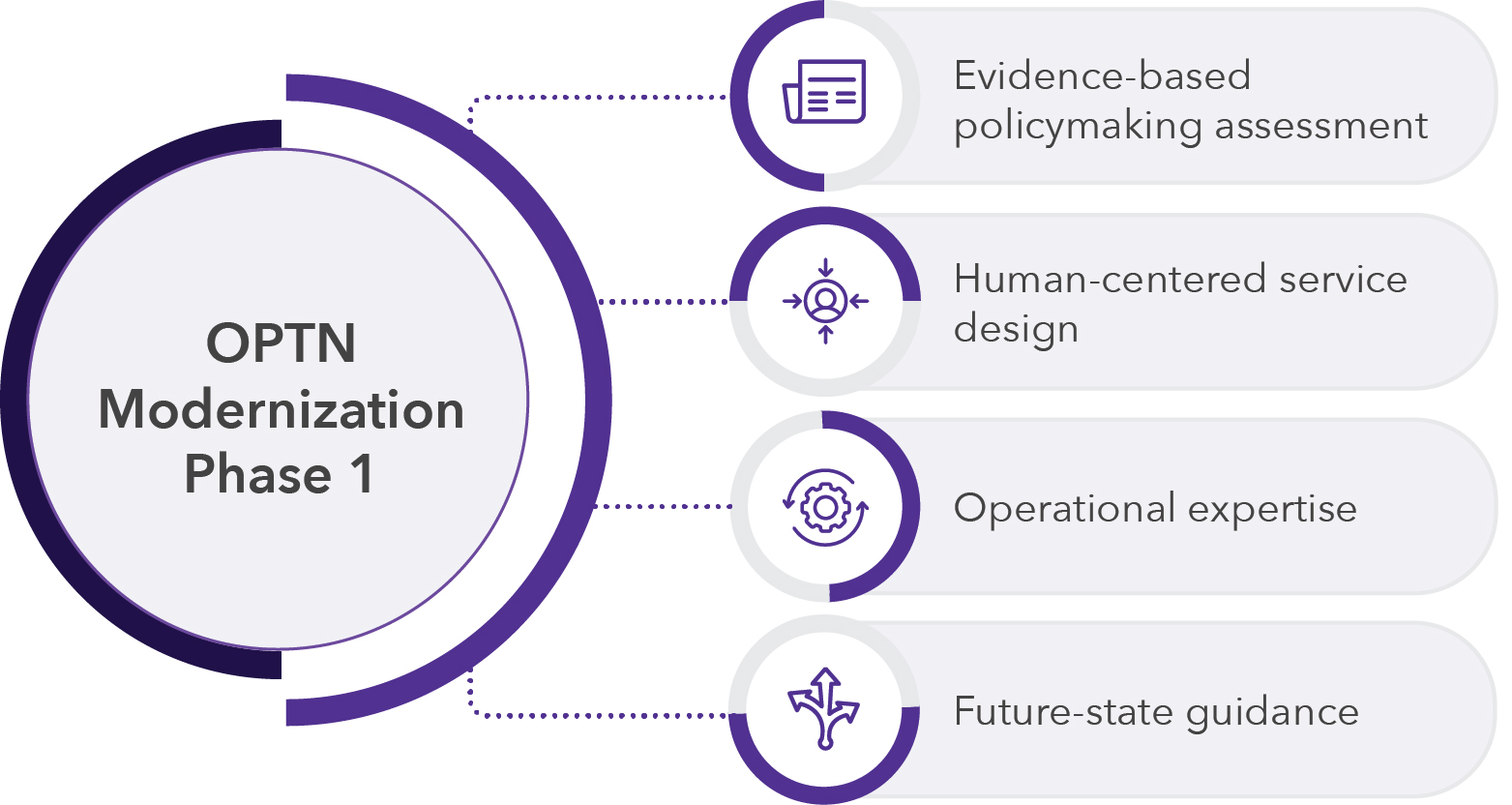
HRSA launched the OPTN modernization initiative in 2023, tapping Maximus to join a team of government partners collaborating with the OPTN Board, specialized committees, clinicians, and data experts. The multi-year effort reached a milestone in 2025 with completion of Phase 1. For this phase, Maximus contributed a mission-driven approach, including:
- Operational expertise to help ensure OPTN policies are grounded in evidence and efficiently and consistently developed and implemented
- A human-centered service design blueprint informed by user interviews and public comments—aiming to ensure that policies are shaped by the voices of patients, families, and clinical experts
- Data-driven analyses, including a comprehensive assessment of the OPTN policymaking framework, workflows, and operations—supporting a core objective of ensuring policymaking processes are transparent, inclusive, and responsive to the needs of patients, clinicians, and the transplant community
- Future-state recommendations to improve patient outcomes and overall OPTN functionality and accountability
Results & Looking Ahead
While results of the OPTN modernization initiative will be realized over multiple phases in the coming years, HRSA has published highlights of the initial work—reinforcing its commitment to transparency, accountability, and progress. With Phase 1 complete, the OPTN modernization initiative is poised to make significant strides in transforming organ transplantation. Maximus looks forward to continued collaboration as this initiative progresses.
Barbara Keating Managing Director, Federal HealthThis initiative reflects Maximus’ broader commitment to advancing large-scale public health programs, where digital modernization and collaborative innovation can improve health outcomes for communities nationwide.