The interview originally appeared on Federal News Network on January 15, 2026.
Federal health agencies face a paradox. Beneficiaries expect personalized, accurate care delivered quickly across the Defense Department and the Department of Veterans Affairs programs. But the underlying systems are sprawling, complex, and constantly evolving.
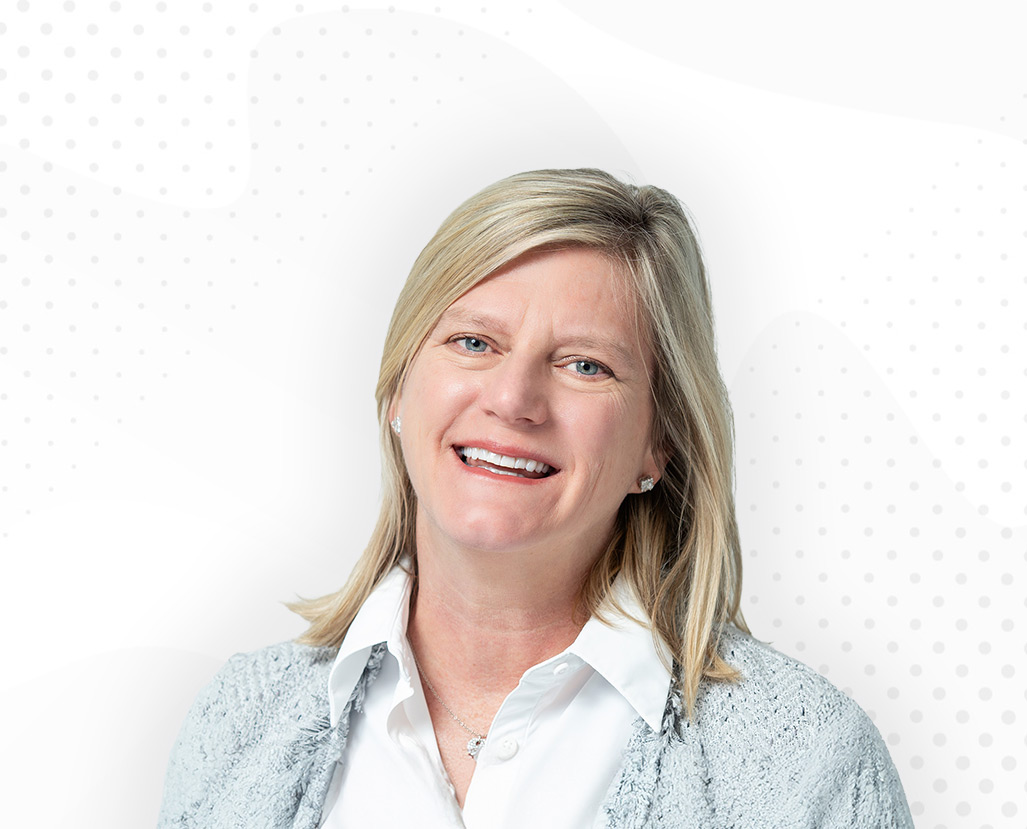
Kelley Harar, vice president for federal health at Maximus, contends the solution isn’t a single tool. It’s the deliberate fusion of interoperable data, artificial intelligence, modular delivery, and human oversight. That fusion will create a secure, patient‑centered ecosystem that performs at scale, Harar said during an interview for Federal News Network’s Forward-Thinking Government series.
“We’re in the perfect storm of federal healthcare,” she said. “We are looking at rising healthcare costs, a shortage of medical doctors, and an aging population. We can make a huge impact by improving delivery through technology and data.”
Efficiency that actually lowers cost
Health delivery costs continue to climb. The cost of healthcare in the United States has outpaced gross domestic product.
Harar’s premise is straightforward: Agencies can bend the curve by streamlining workflows with automation and analytics, then surfacing the right information at the right moment for clinicians, beneficiaries, and administrators.
“You can incorporate technology and streamline your delivery to make it more accurate and at a reduced cost,” she said.
In practice, that means consolidating entry points, cutting redundant logins, and moving critical data through end-to-end encounters. Harar pointed to telehealth and mobile assessments as examples that shorten cycle times without sacrificing quality.
“By offering different channels through telehealth, we are cutting the time and driving efficiency into the systems so that our soldiers can be ready.”
Personalization built on a longitudinal record
The heart of this ecosystem is a longitudinal health record that follows each servicemember or Veteran across episodes of care. When encounter data flows seamlessly, clinicians can spot early signals and intervene before small issues become expensive conditions.
“It really allows us to take a look at that whole health picture,” Harar said. “By having an understanding of those early signals, you can provide proactive treatment.”
Whole health is more than a trendy term, she was quick to add. It’s the practical use of encounter data, behavioral insights, and social determinants to inform care plans, referrals, and follow‑ups. Harar noted that even routine readiness exams benefit when the record exposes trends in hearing, vision, or musculoskeletal issues.
“We can flag where we need to really focus,” she said. Plus, the use of “AI documentation at the end of the encounter takes the administrative burden off the provider.”
Interoperability that shows up in the exam room
Harar also emphasized the importance of personalized care. Interoperability is where personalization becomes tangible. Harar recounted a simple example from her own experience: an emergency room visit for a fall. Months later, a primary care physician had the information about the ER encounter in the record and asked her about follow-up needs.
“We can take that encounter had in the emergency room, and it goes automatically into the system,” she said. “Never before would my primary care doctor have asked specifically about that.”
For DoD and VA, interoperability can speed assessments and help commanders and care teams act on complete information. Predictive analytics can triage where to focus, then AI and machine learning can document encounters and flag anomalies. When those capabilities are modular, agencies can deploy them service by service without disrupting their whole technology stack.
“You cannot do that unless you have a holistic system that can provide the intake, read through the information, and improve quality,” Harar said.
Trust earned through accuracy and access
Personalization is only meaningful, though, if beneficiaries trust the system. Technology can be a barrier if it’s not aligned to real needs, drives valuable outcomes, and meets user expectations, Harar said. Trust grows when clinicians have complete, accurate records and when beneficiaries encounter fewer hoops to jump through.
Keeping the patient at the center of the health care system is critical because accuracy is the critical component that equals trust, she said.
Reducing redundant data entry and smoothing handoffs respects people’s time and attention, Harar said. It also reduces error rates.
Harar said the goal is simple: capture key data up front, then move it through the encounter so servicemembers and veterans don’t repeat the same details again and again.
“We want to alleviate redundancy,” she said. “We want our systems to capture information up front and transfer it through each encounter.”
Security without bottlenecks
Personalization and interoperability only matter if sensitive data stays safe. Harar emphasized modular security aligned to mission needs, not blanket controls that choke throughput. Zero trust principles, identity‑based access, and careful data tiering keep personal health information and personally identifiable information protected while allowing critical flows to continue.
“We don’t want to create a bottleneck because of the security,” she said. “We want to create efficient flows. You have to understand what data needs to be protected at what level.”
The aim is resilient operations where systems degrade gracefully under stress, where the right identities retain access, and where information assurance is baked into the architecture.
The near future? A convergence play
Asked to pick the single most impactful technology, Harar declined. The real unlock, she said, is the convergence of AI, predictive analytics, and robust data pipelines that feed them. None delivers value alone, Harar said. Together, they can help agencies operate at federal scale, which is admittedly daunting.
“AI is a game changer. Predictive analytics is another,” she said. “But to get them to work, you’ve got to have the database, data scheme, and flows to pick up information correctly.”
Even with smarter systems, humans remain essential, too, Harar added. Medical professionals paired with universal agents must review for quality, validate transactions, and watch for anomalies. A human in the loop is not a hedge; it’s a core design principle for accuracy and safety, she said.
“There are medical professionals reviewing quality and agents reviewing transactions — ensuring systems are secure but also accurate.”