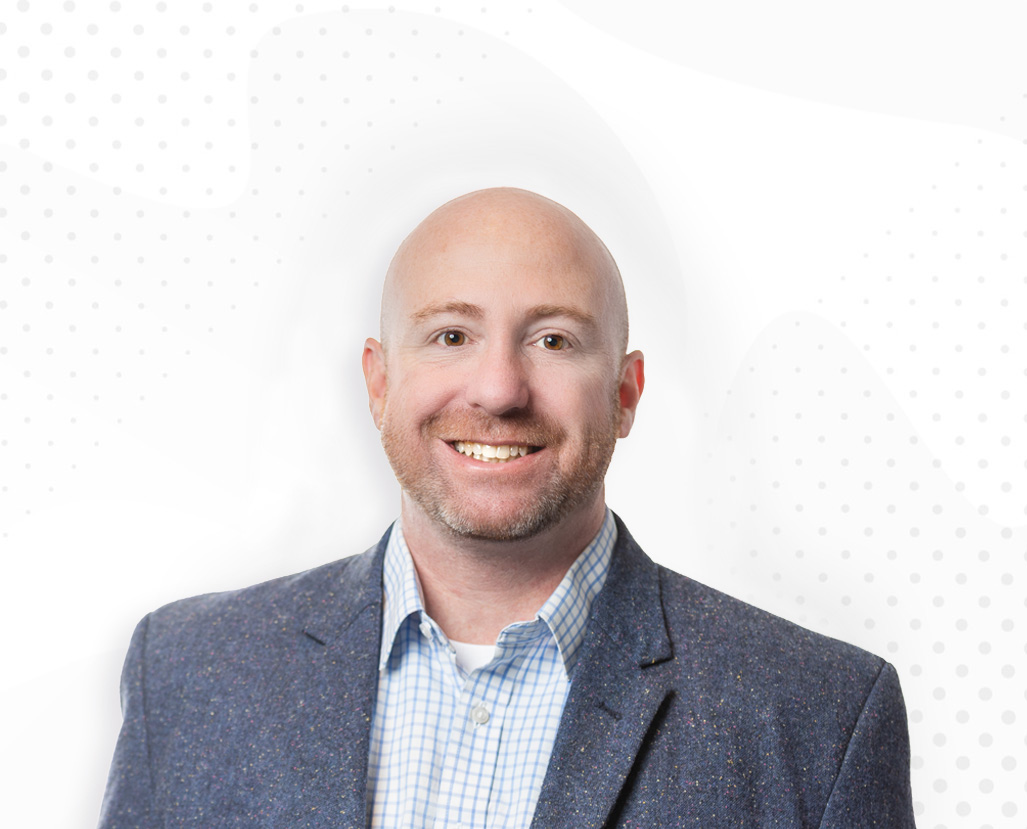
After a public sector career that began on the frontline of human services and rose to executive leadership, David Crowson joined Maximus with a clear purpose: to help state and local governments modernize how they deliver critical programs, while keeping the focus on the people they serve. Drawing on his experience as a SNAP, TANF, and Medicaid eligibility specialist and as CIO for Montana’s Department of Public Health and Human Services, he now leads the design of practical, scalable solutions that simplify access, support caseworkers, and help agencies deliver greater impact.
Frontline insights powering technology solutions for states
From frontline eligibility specialist to product leader, David knows that true impact comes from empathy, practical innovation, and putting people at the center of every policy and system.
Your government career journey spanned from eligibility specialist to state agency chief information officer. What do you remember most from those experiences?
I wanted to understand public service from the ground up. So, I moved 1,200 miles and accepted a role as an eligibility specialist. I managed SNAP, TANF, and Medicaid cases the old-fashioned way — paper files in cabinets, green bar reports, and manual calculations on a black screen using F-command shortcuts.
People came in during unexpected situations, such as a job loss, illness, or a family change. They weren’t experts in navigating government systems, but it was my job to help them, accurately and quickly.
That kind of responsibility never leaves you.
When I moved into technology leadership and eventually served as an agency CIO, the work was never just about systems. It was about evolving how services were delivered so people could receive accurate, timely support, and staff had the tools and workflows they needed to succeed.
We modernized core programs across Medicaid, SNAP, TANF, child welfare, and electronic benefits transfer (EBT) — transitioning away from legacy platforms, rethinking service delivery models, and introducing digital tools — while navigating major policy shifts, such as the Affordable Care Act (ACA), and learning from real‑world challenges along the way.
System decisions are never abstract. There’s always a person on the other end.
The importance of delivering on time
There’s a moment David often revisits when he talks about why he does this work. It’s not a boardroom decision or a system launch milestone. It’s a quiet, high‑stakes moment days before a holiday, racing against the clock so families would have food on the table.
An eligibility system data conversion scheduled for the weekend before Thanksgiving didn’t go as planned. “We were days away from monthly benefits issuing with real fallout. I understood the consequences were immediate and real for families who depend on the food benefit,” he explains.
David spent the weekend making fixes because he knew the system inside and out. When his boss found him holed up in his office, she asked what he was doing.
“I’m trying to put turkeys on the table.”
David brought that same sense of purpose to his current role, shaping human‑centered technology solutions at Maximus. For David, impact isn’t conceptual. It’s practical, personal, and sometimes urgent.
How does your experience as a government technology leader shape your approach to leading the design of scalable, human-centered business solutions for states today?
Change is constant in government programs. Throughout my career, I’ve seen how federal policy, state priorities, funding requirements, and customer expectations continually reshape health and human services delivery. From ACA and Farm Bill updates to pandemic flexibilities and large‑scale eligibility renewals, these shifts reinforced one lesson: systems must be adaptable. Being prepared today means designing solutions that absorb change incrementally, support staff, maintain accuracy, and ensure continuity for the people who rely on these programs.
When I administered health and human services delivery in a state, we contended with accuracy, timeliness, and administrative burden. We tried training, policy changes, quality reviews…everything! But the reality was that caseworkers were juggling enormous cognitive loads in high‑pressure environments.
That context led to an understanding of the need for practical, scalable solutions that respect existing investments. States need tech partners who understand their constraints and help them move forward responsibly.
Joining Maximus gave me the opportunity to apply everything I learned in state government on a national scale. I’ve lived the realities that states navigate — federal oversight, policy complexity, staffing challenges, and public accountability.
Our AI-powered accuracy solution for SNAP exists because it addresses the pain points I also experienced as a leader. Our solution supports caseworkers, not replaces them. It brings together information that often lives in multiple systems, across multiple pages of data entry, within case history, notes, documents, and third‑party data, so staff can more easily see what has happened, identify inconsistencies, and determine next steps within their existing workflow.
The goal is simple: reduce friction so caseworkers can focus on making accurate decisions.
We designed our community engagement solution for Medicaid to meet states where they are. It’s flexible by design and configurable to fit diverse policy, operational, and funding environments across states. Rather than duplicating existing investments, we focused on complementing and extending what agencies already have in place. That approach allows states to respond more quickly to new policy requirements, adjust to changing conditions, and deliver on program goals without unnecessary disruption.
My approach for developing solutions always comes back to one question: “Does this make it easier for states to deliver effective and accurate services and for people to access them?”
What excites you most about the future of technology support for program eligibility processes?
States are becoming more comfortable with AI, and they’re asking how to use it responsibly. That’s where thoughtful design matters, and human‑in‑the‑loop is non‑negotiable.
I’m excited about the shift toward AI-powered, agent‑centered tools. For years, we focused heavily on customer experience, which still matters, but now we’re also investing in the workforce delivering these services. When you give caseworkers better tools, you see downstream improvements in accuracy, timeliness, and the customer experience. Automation can handle repetitive work, so people can spend more time on tasks that require judgment and empathy.
Technology can either help or hinder decision-making. If it adds friction, slows you down, or forces you into unnatural workflows, it actually increases risk. But when it supports you — when it brings the right information to you at the right time — it makes accurate decisions possible even in high‑pressure environments.
My frontline experience and time implementing health and human services technology solutions informed the design of our error-prevention solution, Accuracy Assistant™. We incorporated AI to speed access to information, highlight policy guidance, and reduce repetitive tasks, while keeping the caseworker in control of correcting data inconsistencies. There’s also a feedback loop, so the system continually learns and improves.
That balance builds trust.
What guidance do you have for states considering modernization initiatives?
Modernization at the state level isn’t just technical. It’s operational, organizational, and cultural change, all happening at once under real constraints: aging systems, limited budgets, and programs that can’t afford downtime.
First, modernization should be pragmatic. Big, once‑in‑a‑decade system replacements sound good on paper, but they’re incredibly risky and exhausting for state teams.
Second, users need a voice. If frontline staff don’t see themselves reflected in the solution, adoption suffers and accuracy declines.
And finally, incremental change works. When people, processes, and technology move forward together — even in small steps — you build momentum without breaking what already works.
Discover our SNAP solutions