This article was featured in Policy & Practice magazine.
Across public benefit programs, employment has long served as a cornerstone of efforts to support self‑sufficiency. Traditionally, success has been measured through participation milestones or job placements, indicators that allow states and participants to demonstrate compliance with work‑related requirements.
Today, state and local human services leaders are increasingly asking whether these measures alone reflect what program participants need to remain employed and move forward over time. When job seekers face caregiving responsibilities, transportation gaps, health considerations, and changing work schedules, employment is an ongoing process. Supporting economic mobility begins with helping people connect to work, but it continues through sustained employment, adaptation, and progress toward greater stability.
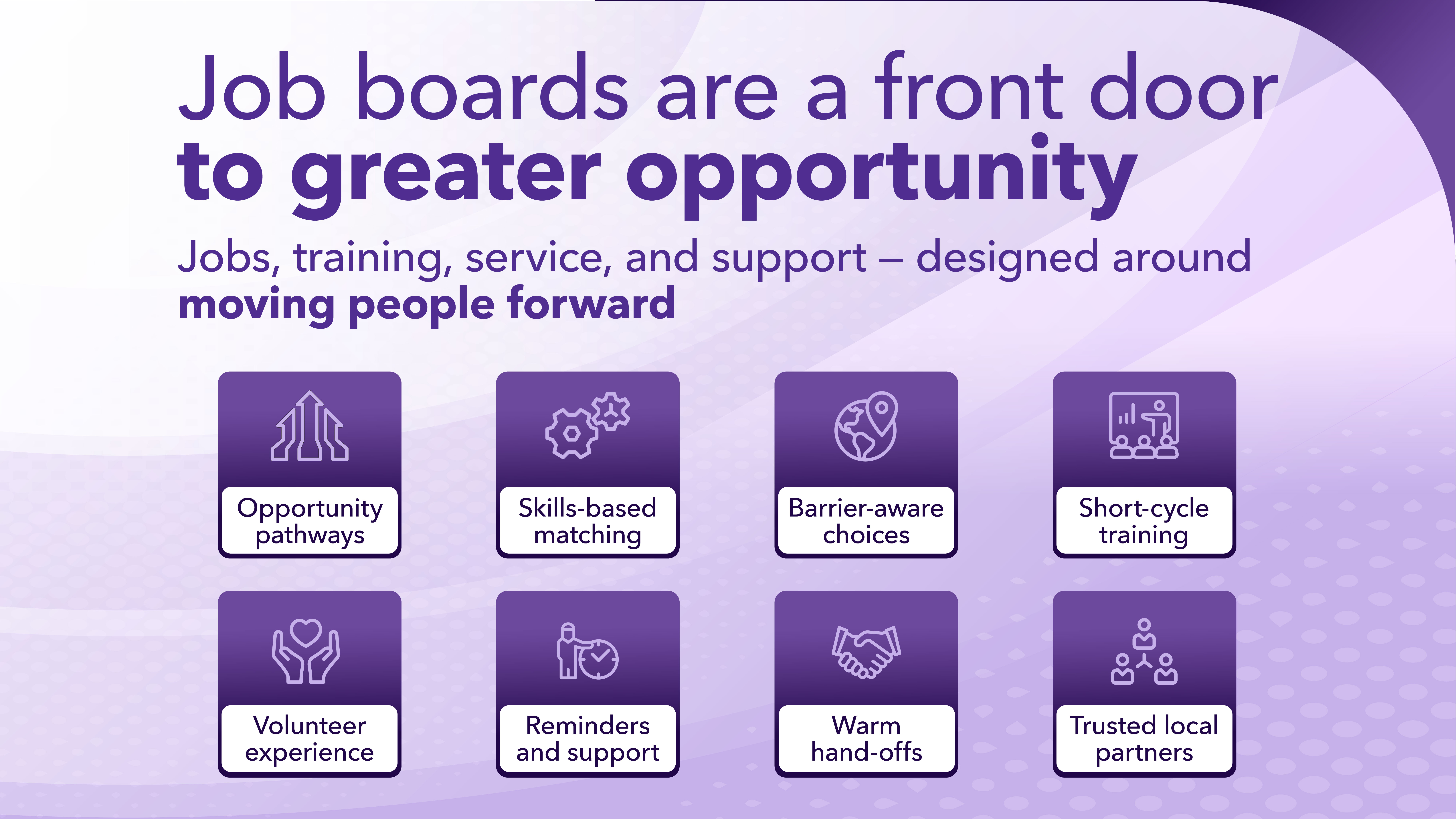
For program leaders, the challenge is not whether employment expectations matter, but how to design systems that meet statutory requirements while supporting durable outcomes — at scale, within constrained resources, and in ways that reflect real‑world circumstances. Advancing economic mobility requires a shift from viewing employment as a transaction to supporting it as a pathway over time.
A converging policy landscape across programs
This shift is relevant across SNAP and TANF programs with long‑standing work requirements, as well as near-term Medicaid community engagement requirements, where implementation models must come together quickly. Although these programs operate under different rules and funding structures, they increasingly share common objectives.
SNAP and TANF bring decades of operational experience engaging individuals around employment, training, and self‑sufficiency. Through real‑world implementation at scale, states and counties have refined approaches to outreach, case management, barrier resolution, and employer engagement.
Medicaid community engagement requirements introduce similar themes, though often with different approaches to compliance and member engagement. Across all three programs, agencies are balancing the need to meet statutory requirements with broader goals such as reducing churn, supporting ongoing participation, and promoting longer‑term stability.
The convergence of these policy goals presents an opportunity for states to adopt employment strategies rightsized to their specific contexts while drawing on proven approaches from across programs. Viewing employment as a pathway, rather than a one‑time transaction, can help align compliance, engagement, and mobility objectives.